Monday, June 19, 2023

Numerologia Ridiculosa

Consider this: how could numerology possibly work with modern calendars (Gregorian) and alphabets (English) that weren't even around back in the day? 

There are many systems in numerology; Hindu (Vedic/Sanskrit), Hebrew (Qabbalah), Zoroastrian (Chaldean), Greek (Pythagorean), Chinese, Tamil, Aztec, etc., go knock yourself out. 

My practical experience is that Pythagoras was Greek. Therefore he would've used the Greek alphabet, not English. Similarly Chaldeans spoke Neo-Aramaic. Note that Pythagoras is the Anglicised version of his Greek name. Note also that the double consonant of 'th' (worth 2 + 8 =10!) is represented in Greek by the single letter theta θ (worth 9!)... so, the numbers don't add up depending on the system used! 

Now, combine differing alphabets with the fact that both cultures used different calendars - neither of which were the present day Gregorian Calendar - and you get alphanumerical soup á la Monty Python which cannot possibly mean anything contingent nor coherent except for arbitrary value systems imposed upon the letters and numbers. Take for example:

Pythagoras born circa 570 BC becomes Πυθαγόρας c. 570 BC. Let's break it down.. 
Pythagoras/English: 7+7+2+8+1+7+6+9+1+1 = 49 = 13 = 4
Πυθαγόρας/Greek: 80+400+9+1+3+70+100+1+200 = 864 = 18 = 9. 
Two different results. (Greek values are derived from ancient Isopsephy using Latin letter names. They may not be correct, but some other sources concur.) 

Also, Πυθαγόρης in Ionian Greek is different again. Pythagoras lived c. 570 – c. 495 BC. Of course none of this makes any sense because it can't. It is nothing but magical thinking. What would his numerology chart look like then ha ha ha! Like this…


Straight away what we're seeing here is how different it is from modern charts, that the modern numerological diagram is based purely on the 2nd Millennium calendar, not any dates pre-Christianity (BCE). Modern dates are based on a ten-integer system of 12 months in the year, 100 years per century, and 1000 years for a millennium. Clearly Pythagoras would've lacked any knowledge of Christ's Advent and most probably they didn't use 4-digit calendar years e.g. 1960. The modern diagram only has pictorial relevance for those living in the modern era and possibly does not represent BC factors. 

At this point it's worth bringing up the question of why people accept so-called Ancient Truths as being factual, or historically correct. There is no documented attribution of Pythagoras using the tic-tac-toe chart. It seems to be a modern 20th century invention. 

Okay, if you're still buying into the Pythagorean tic-tac-toe chart theory, how and where the fuck did Pythagoras get his year numbers from? The Gregorian Calendar (or for that matter, ANY calendar?) is purely a social construct. It does not exist outside of human reckoning. It is an invention, not Absolute Truth. How then, can arbitrary or random numbers assume significant meaning? 

For comparison; this author's chart:

Notice how conveniently a 20th century birth fills most of the squares? In fact I'm guessing that back in Pythagoras's day he only used names, as birthdates would surely have been meaningless. I challenge anyone to show how Mr. P used calendar years! 

~~~~
Furthermore, regarding a² + b² = c² (the sum of the two squares sitting either side of the triangle is equal to the square of the high pot 'n user):

No, Pythagoras didn't 'invent' the theorem, he learnt it along with the eternal nature of the soul and the concordant practice of yoga and vegetarianism when he visited India. The theorem falsely attributed to him was previously recorded in the Śulba Sūtras compiled by Baudhāyana in the 8th Century B.C.E., several centuries before Pythagoras was even born.

A similar plagiarism happened with the so-called Fibonacci Sequence and Pascal's Triangle which both came from Pingala's writings. These plagiarisms helped promulgate Eurocentric propaganda and the myths of European invention still exist to this day.

Friday, March 24, 2023

The problem with gender classification in sport is that gender, like race, is a social construct.

The problem with gender classification in sport is that gender, like race, is a social construct. As such there is neither an exact scientific definition nor test. 

There is no way DNA is or can be linked to anyone 'classified' (stereotyped) according to the controversial and purely hypothetical Race Theory. Yes, ancestry can be traced using mitochondrial DNA (mDNA) but that only determines the matriarchal line of heredity. You could have more genes in common with someone overseas 'from another race' than somebody in your own country 'of the same race'! 

Social constructs are ideologies invented by humans that don't have any strict scientific basis. They're just concepts, or boxes to put people in. 

Prior to the discovery of gene mapping, anthropologists classified 'races' using biological characteristics like skin colour, stature, size and shape of the skull, facial characteristics etc., much in the same way they classed 'gender' by genitalia. With the advances in DNA analysis, chromosomes and genetics, scientists discovered that there is so much variation between social constructs, be they gender or race, that they couldn't pin down anything to a definitive category. 

This causes problems in competitive sport with intersex sportspeople because of the restrictions of Men not being allowed to compete in Women's competitions and of 'gender' being an unverifiable social construct. In the past, the International Olympic Committee (IOC) have tried and abandoned various tests such as buccal smear for sex chromatin, then DNA tests for the presence of Y-chromosomes, now the ever-changing testosterone level criteria. At one stage the IOC even made some women athletes parade nude in front of the judges! 

A possible solution would be to create a third category for Intersex competition. The Men's comp would be open to all genders; Women's comp would be restricted to women only (although no-one is currently certain of by which criteria this is determined as no test is yet to be verified 100% accurate) and Men would be barred from both Intersex and, as normal now, Women's competition.

There is obviously one really simple solution… abandon all divisions and make competition open, a level playing field for everyone (I couldn't resist the pun). Of course women will complain and say that isn't fair as the men have a physical advantage. And so we're back where we started…

And still no definition and therefore no solution. 

Tuesday, March 14, 2023

Typos in Srimad Bhagavatam have confused the editors, proof-readers and typesetters!

Typos in Srimad Bhagavatam have confused the editors, proof-readers and typesetters!
20. FEBRUARY 2022 BY PRABHUPADA NEWS1 COMMENT


TYPOS IN BHAGAVATAM CLOUDS THE VEDIC UNIVERSE 
(the webmaster's title - not mine!) You are here: Home / prabhupadanugas / Typos in Srimad Bhagavatam have confused the editors, proof-readers and typesetters!


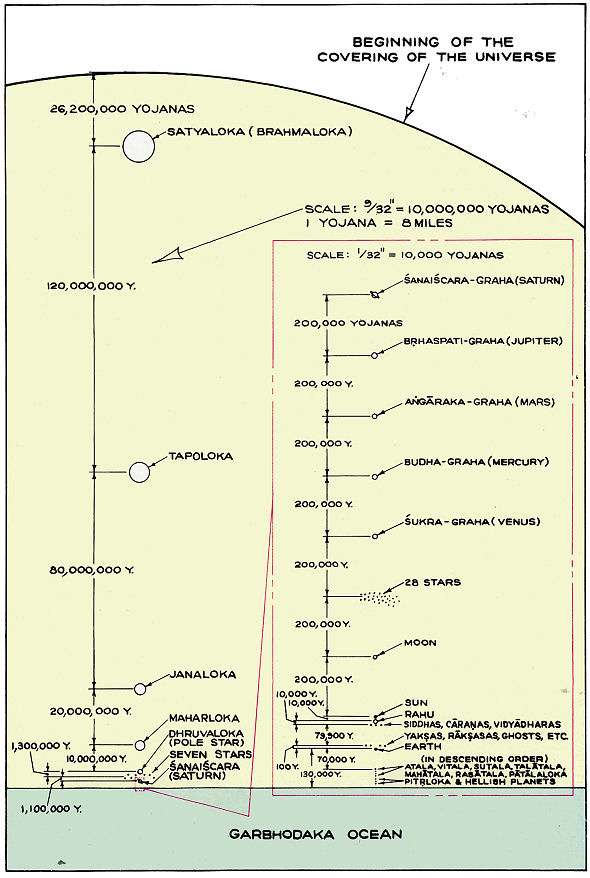
Distances between planets in 5th Canto, Book Two, Chart Three differ not only from the texts – the texts differ from the purports. Even the heavenly bodies change names in some places! It is no wonder Vedic Cosmology has devotees confused the world over. It definitely seems to have confused the editors, proof-readers and typesetters!

Planetary distances don’t match up
Hare Krishna, Please accept my humble obeisances. All glories to Śrīla Bhaktivedanta Swami and His translations and purports to Śrīmad-Bhāgavatam! All glories to Śrīla Bhaktisiddhānta Sarasvatī and His translations and annotations of Sūrya-Siddhānta and Siddhānta-Śiromaṇi (as Bimala Prasad Datta)! All glories to both Prabhupadas!

Using scriptural knowledge and empirical information to arrive at an intellectual and philosophical understanding is bona fide and not the same thing as wild mental speculation about mundane affairs. In fact, one is always encouraged to use one’s brain to understand instead of just parroting things like a robot! Inquisitiveness coupled with healthy scepticism may open many a door locked to even the most pedantic lover of doctrinal dogma.

First, I wish to make it clear that I am comparing at least four systems here – (1) Puranic cosmology, and (2) astronomy, both (i) eastern (Vedic/Jyotisha) and (ii) western (eg NASA), not excluding (iii) astrology, using both the sidereal and tropical zodiacs. So there is a fair amount of subject matter to reconcile. Also I would like to acknowledge that as Bimal Prasad Datta was awarded the title Bhaktisiddhānta for his work on the Siddhāntas before he accepted Abhay Charan De as his disciple (later A. C. Bhaktivedānta Swami), we therefore we cannot dismiss the Siddhāntas just because they present a different perspective to the Bhāgavatam, as both scriptures have commentaries authored by both Prabhupadas.

Regarding the differences between Puranic cosmology (the Bhāgavatam) and astronomy including both zodiacs (sidereal and tropical) of Vedic Jyotish (the Siddhāntas) and Western systems (astronomy and astrology) we encounter an apparent paradox. Sūrya-Siddhānta, Siddhānta-Śiromaṇi and western astronomy/astrology are by and large mathematically the same, apart from any minor difference between nomenclature and the use of geocentric or heliocentric systems – superficially the geometry may differ but the respective calculations result in the same outcomes for both systems. For the purposes of making observations and erecting charts and horoscopes using the motions and positions of the heavenly bodies there is no technical argument therein. It must be made clear that Puranic cosmology does not deal with any of that – for example Ekādaśī is calculated using the jyotisha of the Siddhāntas, not the cosmology of the Bhāgavatam!

Again, I repeat: Using scriptural knowledge and empirical information to arrive at an intellectual and philosophical understanding is bona fide and not the same thing as wild mental speculation about mundane affairs. In fact, one is always encouraged to use one’s brain to understand instead of just parroting things like a robot! Inquisitiveness coupled with healthy scepticism may open many a door locked to even the most pedantic lover of doctrinal dogma.

Personally, in comparing cosmology to astronomy I wouldn’t have expected that our solar system could be mathematically reckoned to a cosmological universe. But in researching this I happened to stumble across one possible explanation – Demigod Yojanas! We already know that demigod time is different to Earth Time – so why not distance as well? After all, time and space are both ‘dimensions’. Read on if you’re interested…

In astronomy the approximate figure of 4 billion miles for the Sun/Pluto distance is a radius, whereas the roughly 4 billion miles wide universe quoted in cosmology is a diameter. This makes our Solar System twice larger at 8 billion miles wide. So, aren’t we trying to compare chalk and cheese here? Something else must be going on.

Before we get to the concept of demigod yojanas…. this is not the place to argue about Flat Earth, Moon Landing hoax, fake NASA, etcetera etcetera. Do that somewhere else and at another time. Sticking to what is relevant here, first we must acknowledge that the SB 5th Canto Chapter 22 is a minefield of typos! I will no doubt be accused of fault-finding but really I am just trying to get to the bottom of this and the truth. What I want to bring attention to here (rather than to nit-pick) is that the confusion caused by differences in the two models (cosmology vs astronomy both eastern and western) is compounded many times over by the errata and typos in the 5th Canto.

Although eastern and western astronomy closely align, if we compare the three models they don’t match up, and we’re used to that. For example, Lord Brahmā’s planet Satyaloka at the top of the cosmological universe, being some 2 billion miles above the Sun, would work out to be closer than our astronomical Pluto at roughly 4 billion miles out. This doesn’t make any sense – two completely different sized models.

 
Charts 1, 2 & 3

  
Now… add in the typos and see how even more confusing it becomes!

Take Śanaiścara (Saturn) for example. Using the texts from SB 5.22.8-16 or Chart Three at the front of the volume we find that Saturn is 1.3 million yojanas (10.4 million miles) above the Sun in the text – yet from Chart Three it is 1.4 million (11.2 million).

Which one is it?

Alas, the figure given by western astronomers is over 70 times that, around 886 million miles, illustrating the vast difference in the sizes of the two models. Adding Pluto to that equation emphasises that even more so.

Now… SB 5.22.8 re Sun/Moon distance clearly states ‘lakṣa-yojanataḥ’ and in the translation 100,000 yojanas…

… yet in Chart Three we find the Moon drawn above the Sun by 200,000 yojanas – not 100,000!

Which one is it?

Nowhere in the ślokas or translated verses do we see the Sun referenced as 100,000 yojanas above the Earth. We only see it using the chart (you may also be able to find in English in a purport) but I cannot find that figure anywhere in Sanskrit or the translation – even using online search tools! Why did Śrīla Prabhupāda use NASA’s figure of 93,000,000 miles in the purports? And anyway 800,000 miles is nothing like the 93 million miles we are all familiar with.

Which one is it?

It is a mystery where the unnamed artist who drew the Chart Three obtained the figure of 100,000 yojanas from for the Earth/Sun distance (perhaps Vishnu Purāṇa?). It’s not in the ślokas or the translated verses, and can only be arrived at by working backwards from the 4 million miles stated in the weird Text 11 purport which comes from the incorrect distances found in Chart Three. Very confusing!

Further investigation led me to realise just how astronomical the size difference (pun intended) of the two models is, the cosmological universe being a mere fraction of the astronomical universe that uses Light-years to measure vast distances (six trillion, or 6,000,000,000,000 miles approx = 1 light-year).

I do remember reading elsewhere that a yojana is a relative measurement – which may or may not account for the discrepancy between the two sizes of universe ie Earth vs Demigod yojanas – also it has various values ie 8 miles, 5 miles or 8 kilometres, etc as used by different Jyotish practitioners. ‘As far away as a bull can be heard bellowing’ and ‘as far as one can see clearly’ are two examples I have also come across for 1 yojana. Perhaps a yojana means one thing in outer space and another in a paddock? Or a more feasible explanation as one author suggests, is that in the same way that Demigod time is different to Earth time (eg one day of Brahmā equals 4.32 billion Earth years) perhaps a Demigod yojana is much, much bigger than an Earth yojana!

https://m.facebook.com/VedicCosmology/posts/our-universe-is-4-billion-miles-in-size-but-is-that-demigod-size-or-earth-size-k/1652037028437556/

This actually makes a lot of sense to me in a way when I take the time to ponder the possibility. For quite some time I have agreed with Richard L. Thompson’s view that Vedic Cosmology is described as seen from the Heavenly Planets – perhaps why it seems so perplexing to us. It is no wonder Vedic Cosmology has confused devotees and scholars the whole world over when we try to impose Earth value systems upon it.

We have all heard the expression “Too many cooks spoil the broth”. There was more than one editor who worked on Bhagavad-Gītā As It Is, Śrīmad-Bhāgavatam and similar works with the Devanāgarī, romanised Sanskrit, transliterations, translations, and purports and I think it is safe to say that some have made a few mistakes here and there, as we are all human. This is separate from any confusion caused by any measurement of spatial differences.

Personally I have no objection to the numerous typos in Śrīla Prabhupāda’s books – and I am certainly not criticising Him. Not only do I not mind them, I value them – as they provide a valuable function! These typos serve to identify His Divine Grace’s original books because they have since been removed from the edited, so-called ‘corrected’ and changed modern BBTi versions.

Besides, most of the typos are so glaringly obvious as mistakes that they generally don’t cloud any meaning. Forr eximple, you moste probbly hav no diffculity unda standing wot this sentence meenz. Similarly with figures, when different numbers describe the same phenomena (such as 10,000 yojanas and 1,000,000 yojanas for the same distance of Siddhaloka below Rāhu) we can do the sums in our head and work out with simple arithmetic, which one is correct.

Distances between planets in 5th Canto, Book Two, Chart Three differ not only from the texts – the texts differ from the purports. Even the heavenly bodies change names in some places! It is no wonder Vedic Cosmology has devotees confused the world over. It definitely seems to have confused the editors, proof-readers and typesetters!

Using both the search engines built into Vanipedia and Gitabase as well as reading and skimming through the actual 5th Canto, I cannot find a single Sanskrit reference to the 100,00 yojana distance between the Earth and the Sun anywhere in the texts (either in the Devanāgarī script, the Sanskrit, the transliterations, or nor the English translation of the Sanskrit). It appears in Chart Three as 100,000 yojanas; elsewhere in English in the purports varying as either 100,000 yj or 93 million miles; yet not a single mention in the actual Sanskrit ślokas – at least not in the 5th canto which deals with our position in the material universe in detail.

Now, some of you might gloss over my pedantry as being trivial. But as having a western-type triple Virgo symbolism I was born to focus on these sorts of things. If it exists somewhere else in Sanskrit I would be very grateful if someone can show me where – IN SANSKRIT – in the Śrīmad-Bhāgavatam, the Earth/Sun distance is (I am NOT referring to in the English in the purports). As far as I can see there is no reference IN SANSKRIT to either 100,000 yojanas nor 93 million miles which is a NASA figure. I would be very happy to be proven wrong, please do!

When using the search tools built into Vedabase, Gitabase and Vanipedia, with the words “Sun”, “Earth”, “distance”, “above” in quotation marks – even including the Boolean term AND between them to narrow down the results – I didn’t find ANYTHING in the actual Sanskrit-to-English text. There are plenty of references everywhere else but they all use figures based on western astronomy, not Vedic. I guess this is why Śrīla Prabhupāda uses the 93,000,000 figure. As far as I could fathom the actual figure of 100,000 yojanas (or 800,000 miles) comes from the Viṣṇu Purāṇa, not the Śrīmad-Bhāgavatam.. but that still doesn’t explain how 100,000 yojanas found its way into Chart Three mistakenly as double that figure.

So we have these unusual entries:

#1. SB 5.22.8, the Moon is listed as 100,000 yj above the Sun; whereas in Chart Three it is drawn as 200,000 yj;

#2. SB 5.22.11 is an absolute ripper of an example of errata and typos in 3 ways. The bold text says that the 28 Stars are 1,600,000 miles above the Moon, yet in the purport it reads “above the Sun”. The whole purport 5.22.11 says:

“The stars referred to herein are 1,600,000 miles above the sun, and thus they are 4,000,000 miles above the earth (sic).”

If we take the Earth/Sun distance as 800,000 miles (and ignore what is written elsewhere in SB about 93 million miles) it can only add up to 3.2 million. The distance of the 28 Stars above the Earth at 4 million miles only adds up using the Chart 3 distance of the Moon being 1,600,000 miles above the Sun instead of 800,000 as it the text. Therefore the 5.22.11 purport is wrong in three ways because it uses:

a. Double the Moon/Sun distance resulting in the wrong figure;

b. An unexplained figure of 100,000 yojanas for the Earth/Sun distance found nowhere but in the incorrect chart. Nowhere in the body of the text EXCEPT THE PURPORTS is the height of the Sun above the Earth given – and even then in other places it is 93 million miles; and

c. It says the sun and not the moon;

#3. SB 5.24 chapter introduction states re: Siddhaloka, etc are below Rāhu “by another 1,000,000 yojanas” whereas 5.24.4 says only 10,000 yojanas;

#4. Chapter 24 goes on to say that the seven Subterranean planets, each the same size as Earth, are 10,000 yj apart. Chart Three shows them situated as starting at 70,000 yj beneath the Earth (which is about 1,000 yojanas diameter according to Sūrya-Siddhānta). This is also summarised previously in the last verse 5.23.9 which says 30,000 yj below the subterranean planets lies the Garbhodaka ocean some 130,000 yj below Earth. None of this adds up when looking at Chart Three.

The only way anyone can interpret subterranean as meaning ‘inside hollow Earth’ is obviously by taking its meaning literally and disregarding the arithmetic. They can’t all be the same size as Earth and yet fit inside it! Yes, ‘subterranean’ means ‘below the crust of the Earth”, as in underground – but certainly not below the Earth’s plane which is the context in which it appears to be used! Perhaps an overzealous editor substituted or suggested the word not knowing the correct context of ‘subterranean’?

These are just a few typos that I found by double-checking a few chapters of just one book. My point is, the Śrīmad-Bhāgavatam is wonderful, but regarding these minor discrepancies, anyone who takes EVERYTHING they read literally, especially the multitude of contradictions in the 5th Canto, is sure to be getting the wrong picture. Perhaps they spent a little too much time experimenting in Haight-Ashbury during the 60s? Maybe that explains how some people can accommodate both a Flat Earth and a Hollow Earth at the same time…

From what I have read, besides Hayagrīva who was very qualified and did most of the editing and proofing before anything was sent to the printers, there were others who at various times may have ‘helped’ eg typed, copied manuscripts, dotted the i’s and crossed the t’s etcetera to get everything ready for printing. We take it as a given that the Devanāgarī script, Sanskrit romanisation, word-for-word transliteration, and all the text translations were all done by highly qualified and experienced people. You will be hard-pressed to find any mistakes there.

It is in the purports that we invariably find all the discrepancies, not just typographical errors, for in some places the information is for the wrong śloka, partially scrambled, or completely incorrect, rendering it very confusing to the reader. This is where I suspect some garden-variety editors made very human mistakes.

We all agree that Śrīla Prabhupāda’s Bhagavad-Gītā As It Is and Śrīmad-Bhāgavatam are masterpieces. As I have said before, the typos that they do contain help identify them as the originals because subsequent edited and altered editions don’t have them. Therefore they serve a valuable purpose rather than detract from the greater body of work.

No-one can deny that human error has crept into the editing of SP’s books. These listed typos are proof of that. Yet it does not stop us from marvelling at these most sacred of scriptures.

In your service,
Sam, Melbourne
Hare Kṛṣṇa
हरे कृष्ण


My comment (the sole reply) 
Bhakta Sam says:
4th March 2022 at 3:12 am
Hare Kṛṣṇa Prabhus,

Firstly, may I begin by thanking our gracious Webmaster for improving my submitted article with much needed diagrams and pertinent emphasis in bold type. I appreciate it very much, namaste.

Secondly may I follow that by asking the reader to entertain that so long as the differences are recognised there is no conflict or confusion if we acknowledge the different purposes of Srimad-Bhagavatam and Surya-Siddhanta. Cosmology is not astronomy and vice versa.

All I am trying to do here is highlight several typographical errors – it is not so much a criticism but an observation. I am certainly not the first to fail in their attempt to reconcile the differences between the systems – if that is at all warranted, let alone possible! Countless pundits (way, way more qualified than I) have each made their unique contributions, all of them differing in some slight way.

Hey, even the ancient recognised Jyotish experts Aryabhata, Bhaskara, Brahmagupta, Kalidasa, Varahamahira, Vateswara etc didn’t agree on everything and gave different values for one yojana, used different terminology and methods of calculation and interpretation. Not only that, but the Surya-Siddhanta (both ‘old’ and ‘new’ versions), Siddhanta-Siromani, Vedanga Jyotisha and Visnu Purana all differ vastly in astronomical methodology from the cosmology of the Bhagavatam. Jyotish is Vedic astronomy and astrology, not cosmology. They are separate ‘sciences’ if you like (also, there are different horoscope systems and terminology in North and South India and dozens if not hundreds of calendars used all across the Subcontinent. Not all Indian astrologers are the foremost experts in Jyotish! Again, that is not a criticism, just a fact. Oh, oh, oh… and then… we have the TVOP, the Temple Of Vedic Planetarium…. alas…

Basically what I am trying to say is that puranic cosmology is not Vedic astronomy, and the TOVP will be a laughing stock if they try to present it as such – because the heights above the plane of Bhu-mandala have nothing to do with the order of the orbits of the planets or for that matter, calculation of Ekadasi and erection of horoscopes.

Correction and additional information:
Surya-Siddhanta lists the Earth/Sun distance as 4,331,500 yojanas. Based on the averaged orbital distance of 93 million miles (NASA) this equates to a yojana of 21 to 22 miles give or take a furlong or two (using a yojana of 8 miles that equals 34,652,000 miles. At 9 miles it equals 38,983,500). To this day there is no known definite value for a yojana – and it is highly unlikely that it would happen to be an exact whole number like 5, 8 or 9 (miles weren’t even around at the time the Jyotish shastras were written). Many Vedic astrologers use a yojana of 9 miles; some use 8 miles (like Prabhupada quotes); and others use 5 (like the British Raj made official when they assumed dominion) and yet others, 4½ miles.

The only planet diameter/distance that Surya-Siddhanta got right is the Moon¹. Based on that, a yojana works out to be roughly 5 miles. Why should a yojana always be a static number? (All evidence points to it having different values depending on context, at least according to Surya-Siddhanta and Siddhanta-Siromani.)

This Moon data was correctly calculated by ancient Greek and Indian astronomers using parallax. By viewing the Moon² against the background of Fixed Stars at the same time of day from separate places on the globe, this enabled them to triangulate, and using the different data from these, they could compute the actual distance and size. And they got it right³, thousands of years ago. This was not possible using other heavenly bodies as they are too far away for any meaningful parallax to be observed.

Footnotes:

¹according to NASA data, verified by shooting a laser at a mirror placed there and measuring the time interval for reflection

²the atmosphere bends light (refraction) making observations with the eye subject to varying degrees of error. Straight up has the least refraction. The closer to the horizon, the greater the error as the atmosphere is ‘thicker’ and bends light more. So much so, that at sunset, when looking at the setting sun it is already below the horizon. This is why the sun appears to rise and set slowly yet moves faster across the sky during the day. On the horizon, it looks like it is taking twice the time to move through a degree of arc due to refraction, keeping it visible by bending the rays of light. Therefore there is less error when measuring bodies close to Earth (even then, because of the error introduced by refraction even Surya-Siddhanta isn’t accurate for calculating where on the globe an eclipse will be partial and where it will be full).

³the Moon distance of both assessments is very close:

NASA: 252,088 to 225,623 miles (furthest to nearest; elliptical orbit, not circular)
S-S: 257,831 miles. Renowned ISKCON author on the subject Richard L. Thompson (Sadaputa das) calculates that by using the circumference of 324,000 yojanas we divide by π (3.141592) to get 103,132.4245796 yj and again by 2 to arrive at 51,566.2122898 yj as the radius, or, the Earth/Moon distance in yojanas. Then, using a yojana of 5 miles we multiply that to get 257,831.061449 miles, very close to the NASA figure. He therefore summises that in this instance one yojana equals approximately (and certainly not exactly) five miles. Give or take a furlong.

It seems there are discrepancies not only between Surya-Siddhanta and Srimad-Bhagavatam but also between S-S and NASA. None of them concur – which is not really a problem at all! The Puranic Cosmology of S-B is not designed for astrology i.e. calculating Ekadasi or eclipses, and Surya-Siddhanta is positionally similar to the astronomical model NASA gives.

So as long as those differences are recognised there is no confusion so long as we acknowledge the different purposes of Srimad-Bhagavatam and Surya-Siddhanta.

Thanks again,
Ys Sam
हरे कृष्ण

Thursday, December 08, 2022

Okay so Jesus...

Okay so Jesus was born during the Roman Empire and was subjected to persecution because He said God was mightier than the ruling Emperor - then, considered the ultimate blasphemy - and, therefore, punishable by death. 

 And so shit happened. But 300 years later with the decline of the Roman Empire, the most recent emperor Constantine saw the strategic importance of resurrecting Jesus to Divine status; so he reported he had seen a flaming sign on a cross (fraudulently?) proclaiming victory as he headed into battle, and thus he declared Christianity to be the sole legal religion in the newly-named Holy Roman Empire because he was "ordained by a vision". Too good to be true? 

 A couple of years later he hung his second wife and son from his first marriage when he found they were screwing behind his back. Not very Christian of him to kill his family, eh. Any hoot, over the next several centuries there followed a series of 'Ecumenical Councils', a fancy Christian term for 'changing the rules and moving the goalposts'. 

Generally, Christianity had moved underground by necessity through persecution (hence the symbolic fish painted over doors due to covert worshipping places) and had dissolved into a multitude of teachings.

 Bits of The Bible were chucked out and others brought in. There is even speculation/evidence of an early form of Christianity that accepts reincarnation as a valid doctrine! Even King James got in on the act and had an altered bible named after him (KJV, the official King James Version, for the Church of England). The height of the entire farce was when the Vatican approved the questionable practice of "Indulgences" whereby "sinners" could "atone" by paying (seriously!) a sum of money to the Holy Fucking Church thereby settling the moral debt. FFS! 

 Okay so then came the Age of Enlightenment, or the Renaissance, or the end of the Dark Ages, or whatever. Martin Luther (not the negro activist) got involved with the Gutenberg Press and organised a new printing of the Bible to be distributed everywhere. This is arguably the most important and first technological revolution that changed the modern world as we know it! 

 This really pissed off the clergy because prior to this, the only way laity (the common people) had access to scripture was through ordained Priests reading it aloud at congregation (bibles were hand-written and therefore scarce). This meant 'no need to congregate' which really pissed off the Church. 

 Power To The People!

 The protests that arose (and the book burning?) gave rise to the Protestant Movement. Derr. And Lutherans. And later Methodists. And yeah, you know the rest. Gone was Constantine and the Vatican's monopoly of Christianity. Next was evangelicals, pentecostals, mormons, adventists, born-again, you name it. Roman Catholics no longer had a monopoly on Christianity. Sure enough, just like Hinduism with its endless string of "avatars of Vishnu", along comes a bunch of "Second Coming Of Jesus" wannabes. Except their dates for end of the world Armageddon never materialise on schedule. Whoops. Another prediction, then another failure. Starting to wear thin now. 

 No, I will not digress into fake Bart Simpson Version or Ron L. Hubbard nonsense. Although i DO believe that there are authorised versions out there, I have no idea which is which. That is entirely outside the area of my expertise as I am not a cleric.

Monday, December 05, 2022

How To Measure God And Personal Power

However noble the concept of 'the encyclopaedia anyone can edit' may be, in practice Wikipedia falls down for that very same reason. 

The best cyclopaedias are written, overseen, proofread and edited by experts, pundits and leading academia in every category. Although the president of the local footy club may indeed provide keen insights into the regional competition they can hardly be regarded as the most reliable knowledge base of the global game. 

Likewise, Wonkypedia cannot be considered an authority on noumena (non-phenomena). Noumena is a Kantian term coined by the German philosopher Immanuel Kant to refer to 'the thing in itself', devoid of outward manifestation. Because science is based on observation and data collection, by such definition noumena is non-scientific. 

Therefore God, by a similar definition, is non-scientific. God is practically 100% noumenal, i.e. 'in the eye of the beholder'. There is a saying that God only appears in front of believers and hides His form from the non-faithful (the literal meaning of infidel). Atheists demand proof of God's existence, of course of which there is none; simultaneously reinforcing their beliefs yet at the same time strengthening the argument for noumena. As the saying goes, 'absence of proof is not proof of absence'.

The theosophical reasoning behind why it is necessary for God to hide goes as follows:

Let's say the kiddies are playing dress-ups. The eldest son pretends to be the father, the eldest daughter the mother, and the rest of the siblings and friends play the part of naughty children. This can only convincingly take place if the parents are absent - for if they were present, the child actors would cringe in their rôles. 

In the same way, for the individual spirit souls to play out the false dream of material life seeking happiness independent of any supreme authority, this can only be convincing in the absence of any such authority. So God hides, that we may continue with the fanciful delusion that we answer to no-one. Otherwise there is no meaning to 'independence'. 

Actually we are never truly independent. Whatever independence we achieve is an illusion granted by our Lord, just like the fanciful playing of children playing dress-ups. 

We depend on air to breathe but we have no control over the atmosphere. We need water but can't control weather. We need sunshine for warmth but can't control that either. None of the force majeure do we have control over. We can control little things, like how much sugar to put in our tea, when to turn up to work, which route to take on the roads, whether to return a phone call. 

If it is by those minutiae that we define our lives then our lives are indeed trivial. This is where Whakypedia comes in. Wankerpedian editors may war unendingly over moot points that really have little influence on the world outside their desk. They are, in effect, 'playing God' in their tiny little worlds, incapable of allowing opposing opinions to breathe precious air. Who made them 'God'? They did, themselves in a self-indulgent display of excess hubris. 

Look, if God wants to thump His chest saying "I am the best", I don't have a problem with that. It's when pissweak little Johnny down the road does it that I take offence. 


Saturday, July 30, 2022

The LIV Tour and American School Mass Shootings

 What does the LIV Tour have to do with US school massacres, and why xenophobia (fear of foreigners) is wrong? 


The name LIV is a reference to the Roman numeral for 54, the score if every hole on a par-72 course were birdied and the number of holes to be played at LIV events.


9/11 survivors are protesting against the new Saudi-backed breakaway LIV Golf Tour because 15 out of 19 of the 9/11 hijackers were born in Saudi Arabia. That is as racist and xenophobic as refusing to eat pizza because the Italians were on Hitler's side when WWII started. Or giving up Chinese takeaway because of the Tiananmen Square Massacre.


Do Americans protest at the Major Golf Tournaments where the prizemoney comes from US companies because 15 out of 19 school massacres were committed by mass murderers born in the USA? No. And just because someone is born in Saudi Arabia does not mean they are an Islamic jihadist any more than an American is likely to be a mass shooter at a school.


It wouldn't at all surprise me if the LIV Tour protesters were also religious bigots and Islamophobic zealots.


To all the sportswriters dishing out on pro golfers abandoning the PGA Tour to join the alternative LIV tour, it's not all about the money. As Phil Mickelson says: "I can't even show my kids footage of me winning PGA tournaments because the Tour owns the rights. It's my swing but I have to get permission... it's as if they own my shots!"


More and more golfers are leaving the PGA Tour for LIV. I think it's a good thing. For too long the PGA had a bully-style monopoly in golf where there hasn't really been any other alternative for golfers to earn a living.


It's the epitome of American Capitalism with a capital 'C'.


Wednesday, April 06, 2022

Religion v Archaeology

Arriving at a correct historical perspective – why is there so much mutual exclusivity? 

Every religion has its own peculiar account of history that is not only different from the others but also the current scientific understanding. For instance there is no physical evidence of any early Mormon settlement in the Americas which they claim to have happened over 2,500 years ago - well before the time of Jesus! When we consider that their version of history contains numerous anachronisms (such as horses, elephants, wheat, barley, solk, chariots, windows, steel, swords etc that were not in the Americas at the time) this is totally at odds with accepted science eg archaeology, genealogy and linguistics. Therefore - either science is wrong, the Mormons are wrong, or, possibly, both are wrong! 

Let us consider:
Australian Aborigines and the Dreamtime stories (Spiritic) 
Biblical creation stories (Abrahamic) 
Chinese creation stories (Taoic) 
Hindu creation stories (Dharmic) 
and several other (Animistic, Magic, Mystic, Siddhic, Superstitious) etcetera, such as Manichaeist, Vudun and Zoroastrian creation stories

That none agree indicates there is no one theory that fits all accounts. One or two or more may be partially right or they could all be wrong - and that includes the scientific view. Yet because of geographical isolation, cultural norms and value systems all may have 'evolved' from the one creation event (including the Big Bang, Mediocre Kerfuffle, or Tiny Little Pop.. depending on one's bent) into varying interpretations and theories. 

Non-religious philosophers argue that Man invents religion to try to make some sense out of the seemingly chaotic world and to give some purpose to the randomness of life. Religious philosophers argue that without a higher spiritual being there is no reason-to-be and life is devoid of any meaningful purpose. 

That a person may change their belief systems more than once in a lifetime illustrates that faith is an acquired facet of the personality, not something we are born with, like arms and legs. The tendency to develop faith may in itself be innate, but exactly what the object of such faith may be is left open at birth. The line that divides faith from belief may be more semantic than logical in that beliefs may be more easily changed and faith more or less fixed or fixated. Often faith is recognised by swearing an oath of allegiance to a single God or Dogma but even that is a formality rather than an actual state of consciousness. 

Indeed, one may change faiths several times, including apostasy and agnosticism – or even flip-flop between Creationism and Darwinism! However, none of that resolves the differences in history between science and religion/s. These accounts are just observations, much like history itself is a set of observations, and there are many perspectives, resulting in differing sets. 

What an oxymoron it is that what unites them all is their exclusivist nature - they all declare that they are the one true knowledge! (and mutually exclude each other) Hence the age-old paradox of life, consciousness, our capacity to feel and think (or not) and what to do with all of that. What sets humans apart from other lifeforms is the ability to act apart from the dictates of the senses and to choose rather than react automatically or instinctively as creatures do. Seagulls foraging discarded fries on the motorway do not look up at the Mack truck bearing down on them and muse, "You know what? I'm done with this life as a seagull. To hell with it."

One of the silliest, illogical and blind things about a human is that they decide that their own philosophy is superior to anyone else's - to the point of telling seagulls what to do. "No, you cannot commit suicide, Mr. Seagull; suicide is illegal in the State of Suchandsuch." Actually, seagulls follow their instincts and do not listen to humans. Probably just as well. It could even make them smarter than us. 

So what do we do with all these different histories, religions, philosophies, etcetera? I say we start a war. Isn't that what we humans do, after all? Okay, now we're like seagulls fighting over discarded fries on the motorway again, and this time some of us don't make it out, despite our best efforts. 

Tuesday, March 01, 2022

Have you got a mouse on your windows?


Saying that the new jabs aren't vaccines because they're different is a very weak argument for them not being a 'vaccine'. First of all, define vaccine (not one modern vaccine has anything to do with cows - Latin, vacca = cow (where the name came from). 

A sedan used to be two long poles with a cabin in the middle for royalty which was lifted and ported by several strong slaves or servants. Vehicles don't have to have wheels. 

The meaning of words in the English language is continually changing. Have you got a mouse on your windows?

English is not a dead language. Unlike Latin and Sanskrit, the English language is always evolving and to get stuck on old-fashioned definitions may be somewhat pedantic about semantics in certain circumstances. Regarding 'vaccine' and 'immunity', as the meaning of words change over time, the limited definition of a word's meaning a hundred years ago may no longer be appropriate now. The word 'nice' used to mean silly or foolish, as in "that fellow is a nice idiot, isn't he?". Similarly, 'awful' meant wonderful as in "that was an awfully good show, old chap". Fully sick. Wicked. Etc.

Yes, I know I'm the fly in the ointment here, but please hear me out. I remember you once joked about no longer communicating via smoke signals and have learnt how to use a computer. As a musician I used to be a stickler for analogue recording and for years strongly resisted adopting the new digital format. These days I have come around and when I 'tape' my songs I no longer use physical magnetic tape. Over time words take on new meanings and I try to get my head around new definitions lest I become an old fuddy-duddy - for instance: a 'mouse' on 'windows', 'footage' of 'films', 'video clips', 'crank' the engine to start the car, etc. When we do a search for something we no longer use a magnifying glass but instead utilise a search 'engine' - so, how many cylinders does this search 'engine' have?" I'm joking of course. 

These examples of old terms that have found new meanings with modern technology are similar to the development of new mRNA and viral vector vaccines where the words 'vaccine' and 'immunity' take on new meaning as technology advances. This is a natural development, not a sinister plot. It is merely the English language growing. As I have mentioned before, vaccines no longer have any association with cows. A century ago a pretty woman would be described as being handsome, yet these days the adjective is used almost exclusively with the male gender. A chip used to be a fragment that flew off a woodcutter's axe and now among other things is a component of a computer. I could go on but I'll stop there. 

Without arguing the speculative merits vis a vis acquired vs induced, it doesn't matter HOW your body's immune system mounts a response - as long as it's there, it's 'IMMUNITY'. You either have it or you don't. Without an immune response it is impossible to develop immunity in the first place UNLESS such immunity is acquired from another source - like a tetanus booster which is the transfer of antibodies from a healthy donor who has recovered from the disease.

You don't have to have had tetanus to develop immunity to it. Likewise you don't have to have had CoViD-19 to develop immunity to that either. 

To have immunity you just need to have gotten your body's immune system responding - by whatever means, be it exposure and recovery, antibody boosters, inoculation, vaccination, immunisation and/or a prophylactic regime of a healthy diet (and supplements if needed). 

I don't consider it a fair and reasonable argument to on one hand to declare that we don't know enough about the new 'experimental' vaccines and then on the other hand make any predictions about the terrible things that will happen. Surely this line of thinking is purely speculative? How can we predict the outcome of any unknown quantity? 

Monday, February 28, 2022

Donbas, DPR, LPR - what's really happening?

Ukraine and NATO v Russia. I'm trying very hard to get both sides of the story. But Big Tech (GOOG, FB, TWTR, YT, MSOFT) are actors for Gov'ts. They kick off anyone who dares to go against their one-way narrative. Watching the reporting on the current Donbas/Kyiv drama I can't help but draw parallels with the untransparent way information/misinformation about THAT virus was handled. 

Anything contrary to the World Health Organisation's agenda was labelled as a conspiracy theory. Natural immunity. Zinc, vitamins C and D. Healthy exercise in the fresh outdoors instead of confinement indoors. Bushwalking, golf, surfing, or just the beach. Prophylactic use of antivirals etc (Ivermectin, Hydroxychloroquine - they are actual medicines). Eating lots of fruit and vegetables, and herbs, or doing anything to boost the immune system. 

NONE of these were recommended by WHO, to the point of medical experts labelling them as taboo. Yeah… sure they are. Even meditating and/yoga would probably help but no-one is gonna say "got a virus? Get hip, man!" Ffs, the WHO didn't even recommend Vit C for it! 

The problem with protocols is that they work well with known situations, but sometimes new circumstances require novel approaches (pun intended). I'm sure War Experts know everything about strategies, targets, decoys, which type of combat or Forces to deploy, etc. And as depicted in sci-fi films with invading aliens, often the usual military tactics are useless if not counter-productive. 

We have to know the enemy. That is the key to winning, whether it's a virus or a mutant alien lizard-man. Or a puppet battle with a hidden agenda and secret enemies pulling the strings. If you think this Donbas thing is just Russia trying to get back some lost Soviet territory then you have fallen hook, line and sinker for the picture newsmedia is trying to paint. Do you really think Putin is that stupid to bombastically clomp around trying to take over countries because he's on a megalomaniac power trip? 

That's exactly what America/NATO want you to think. I guarantee he's not that stupid. Neither is Trump. Not saying a word about Biden. But sure, they all love power. All successful politicians do - tell me one that doesn't! 

But what's really going on? 


Friday, February 18, 2022

Electronics, Digitisation, Faithful Acoustics and EQ

With acoustic instruments, it is fairly straightforward using equalisation to render a recorded channel faithful to the natural sound. Usually it is as close as possible to the ideal, or to be contrary, it is deliberately or accidentally made to sound different to achieve a particular effect. 

For example, acoustic steel string guitars rarely sound "good in the mix" unless the middle frequencies are taken out, often with both extremes of the bass and treble range boosted as well. Mainly this is to make the guitar stand out, as the middle frequencies clash because they are shared by vocals and so many other instruments of the middle register. 

However, we have no way of knowing in unbiased reality what electronic/digital instruments actually sound like 'unprocessed' (think Moog synthesiser), because their sounds do not occur in nature. They only come out of amplifiers and speakers, and depending on the types used, sound completely different in different set-ups.

 Even without effects processing, every amplifier lends its own colouration to any driven sound. And so do speaker systems - even more so. A quick and simple way to grasp this concept is to try to put the bottom end through tweeters and the treble end through woofers. Neither speaker is designed to faithfully replicate those opposite ends of the frequency spectrum, and they end up 'colouring' them to the point where both sound like someone banging a china plate on a table. There goes your cymbals and bass drum, gone! 

In fact we are so used to the way sound engineers have mixed electronic instruments in the past (think Hawkwind, Pink Floyd, Emerson Lake & Palmer, Rick Wakeman) that we take it for granted that's the way they're supposed to sound. 

And in the same way that our subconscious mind interprets film score cues - pizzicato strings to build suspense, tubas to illustrate clumsy buffoon-like idiocy, violins for romance, or bass and guitar riffs for Al Capone drama (theme from Peter Gunn, James Bond) - in a similar fashion à la Prokofiev's Peter and the Wolf - we attribute certain digitally fabricated tones such as the famous Fairlight CMI and even the analogically generated ones such as the Hammond B3 organ and Moog synth as an unquestioned 'given'. We expect them to sound a certain way purely from being conditioned by our past experiences. 

But - they all sound different depending on which amp and speakers are used. And without them you won't hear nuthin'. They don't have a sound of their own. Except maybe, if you're old enough you'll know the sound of putting a needle on a spinning record without amplification. Sort of like a bunch of ants yelling in a foam coffee cup. I suspect that if digital music had a similar naturally produced sound it'd be like the old dialup to get on the net. A cacophony of bleeps and squawks. 

I hear a lot of so-called 'music' these days that simply would not exist without electricity. Or computers. It is impossible to reproduce those sounds on any acoustic instrument apart from the human voice. And therein lies their only validity - if it wasn't for that, I would just call it noise. Any of that rap, dance, house and hip-hop converted and played on purely acoustic instruments would immediately sound like a Weird Al Jankovic send-up. 

Which just gave me an idea, to record my next song totally á cappella, mimicking synthesisers and drum machines. Weird Sam Yankabit. 

Thursday, January 20, 2022

Booster dependency?

Will we end up dependent on boosters if they stop our natural immune system working? 

After searching online for hours/days to no avail, I rang the Covid Hotline but they couldn't answer my question either. It's a pretty straightforward query, not that technical - and you'd expect a straightforward "we don't know" if that is the case. They ended up telling me to ask my doctor - but I doubt if they know either. 

The second part to my question (which no-one can answer yet) is, "if I stop any further vaccinations (I've had the mandatory two) and refuse the third, fourth, etc boosters, will my natural immune response kick in and how long will it take?" 

Instead they (the 'authorities', they ones who are supposed to be informed) prattle a load of stock standard responses, indicating that they didn't even take the time to listen properly to my well-worded inquiry, which went like this:

"Given that we know (according to reputable peer-reviewed medical sources) that CoViD-19 vaccines artificially induce an immune response and thus interfere with the body's natural immune system, how long will it take for the mechanism of the body's immune response to return to normal?"

Too much of a mouthful? What I'm asking, in plain terms, is:
"What happens if I don't get any boosters? When will my immune system kick in?"

That's a fairly simple and reasonable question, I think. But they don't. They don't have an answer because they don't know. If they don't know, then aren't they playing with fire? 

Instead, the poor girl on the hotline (she's only doing her job, to the best of her ability, with the info she's given) began a spiel of how the vaccine works, how effective it is, blah blah blah. That wasn't what I asked. I want to know how long it will take for my immune system to return to pre-vaccination status. As I understand it, your body loses its ability to create antibodies to CoViD-19 once you have been vaccinated and instead becomes reliant on the artificially induced response. 

That's all good and well if it means developing antibodies without having to get infected in the first place. But as the immunity wanes, when does the body's natural immune system kick in? Do we become dependent on boosters if it doesn't? 

The plain truth is they don't know, I don't know, and neither do you. 

Saturday, December 18, 2021

Emotions

 The hardest thing in life is to appropriately deal with emotions. By that I mean to incorporate them meaningfully rather than to disregard them, to dismiss them as unnecessary, unwanted, useless or as obstacles. 


As human beings we can conjure up any thought we desire in an instant. To some degree we may also perform any action we desire at any time given that it doesn't break the laws of physics. But the realm of emotions presents a curious paradox in that what may 'seem right' might not at all 'feel right'. At times our feelings are at odds with our conscience, our ethics, our morals or sense of worth. 


Often we 'do the right thing' amidst feeling quite uncomfortable about it. Or we may delight in doing something we know is quite sinister and unwarranted, yet go ahead regardless. So what rôle do emotions play in shaping our character? What is shame for? Regret? Remorse? Hate? Vindictiveness? Fear? Love? Laziness? 


Domesticated animals with proper training might appear to display human traits such as calm, sombre patience, austerity and charity, discipline and obedience; but really they are just acting the part in expectation of a future reward. A way to know this for sure is to withhold any 'treats' (rewards) for a period of time and soon one will witness them reverting back to animalistic sense gratification behaviours. In training them with 'human' traits they are reduced to robots imitating learnt patterns. 


Human emotions - or for that matter, dog emotions - are a complex mixture of tastes (the Sanskrit term is rasa) whether they be positive (likes and preferences) or negative (dislikes and aversions). In one way these can all be classed as anarthas, unwanted things that get in the way of self-realisation, because they collectively represent impediments. The true transcendentalist is really not concerned with anything material, whether it be good or bad. Emotions can definitely be obstacles whenever they cloud our judgment. How many times have we made a bad decision based on being too emotional about a concern? How often do we let our partiality grant undue preference to an unworthy recipient? 


Let's take a hypothetical situation - one we would rather avoid at all costs. Picture two children trapped in a burning house. One is unknown to us, the other is our offspring who unfortunately is inflicted with a terminal disease with little time left to live. Who would we rescue? The child with the potential of having their whole life ahead of them, or our son or daughter who will be dead in a matter of months anyway? 


Of course, without even thinking most of us would instinctively rescue our close family. Emotions aside, it makes more sense to rescue the unknown child with greater lifetime potential. Altruism is borne by what is beneficial for the greater good rather than selfish considerations. 


All other things aside, the singlemost important factor in our lives is what makes us happy. This is 100% determined by our emotions. The happiness felt by a poverty-stricken child upon receiving a gift of a few beans may be far greater than what a corporate businessman feels making a couple of million dollars in a takeover. It's all relative, and it all comes down to rasa, the emotion we feel. 


Sometimes we need a pat on the back, sometimes we get more out of doing something for someone anonymously. It all depends. When I played in a band I'd get a buzz out of the audience cheering at gigs. But as a busker I sensed the appreciation more when a passer-by chucked in a gold coin for a Beatles or Stones cover. That is a truly individually motivated action, and one I learnt to cherish. Often drunkards leaning on the bar don't even clap because they are too busy using one of their hands to hold their beverage. 


Wednesday, December 08, 2021

History of Civilisation

It is very difficult to discuss the topic of 'what qualifies as a civilisation' without getting accused of being racist, white supremacist or whatever because technology is a product of advanced civilisations. Generally this involves permanent dwellings, communities and intensive farming. For instance although the Subcontinent has its tribal indigenous peoples such as the Vedda (aka mountain men of Sri Lanka), their ancient arts and sciences such as architecture, mathematics, music, astronomy, medicine, the wheel and other machines all came from the intellectual class of Brahminical society - not the Vedda. Because of their social class structure the intelligent pandits had the facility to concentrate on intellectual concerns where the “cream rose to the top”. The disc or wheel is an archetypal part of ancient Vedic mythology yet western historians place its invention to only four thousand years ago in line with the concept of early humans evolving from apes into primitive Neanderthals. This recent Darwinian concept is completely rejected by Easterners who adhere to time-honoured traditional lore.


Of course there is also the ancient mythology that Avatars (the embodiments of the Gods) descended from the heavenly planets and introduced knowledge of the arts and sciences to humanity. This concept is not restricted to the Subcontinent and indeed peoples from all over the globe share similar traditions of Gods descending eg Greeks, Scandinavians (Norse, Vikings etc), Orientals and American natives such as “Red indians”, Aztecs, Incas, and Mayan civilisations.


Either way, it appears that technological advancement is either a product of organised complex society, or God-given boons, or possibly both.


Not everyone agrees that Australian Aborigines are “the oldest continuous culture”. After all, they migrated from Asia and that's still here. It may be more accurate and scholarly to describe them as the most isolated for the longest time. It is impossible to date the origins of Chinese culture because it pre-dates the invention of writing and no records exist. A similar situation is prevalent in Indian folklore where they widely accept that their culture goes back millions of years. Certainly both these ancient cultures had highly organised and structured societies which is why they were so efficient and long-lived.


The Northern, Southern and Mesoamericans and various peoples of Oceania are easier to date, being much more recent. In a way the same could be said about Europe but to a lesser degree. Asia and Africa stand out as having the most ancient roots. Few historians argue about whether Aborigines migrated from mainland Asia via the land bridge that existed up until the Last Glacial Maximum when sea levels were hundreds of feet (or metres) lower than at present - it's more about when.


As to why technology appeared in Asia and not Africa - that might rest purely on the differences between tribal and civilised social structures. Perhaps “civilisations” were preoccupied with control, power and opulence by utilising and exploiting resources on a large scale rather than “living in harmony with nature” in small clans and tribes? As the saying goes, necessity is the mother of invention.


There is one controversial theory about early Aboriginal migration in that it was involuntary, that they were exiled by the ruling monarchy in Asia for refusing to abide by the King's (or Queen's) Laws. Survival plays a large role in the history of human migrations, whether it be across the Bering land bridge, the Out of Africa theory, the Out of India theory, the Mongolians and Huns of Eastern Asia, the Celts, Saxons, Slavs, Greeks and Romans of Europe or the Polynesians, Melanesians and Australasians of Oceania. Peoples have always been at war and on the move and Australians are no different. I mean, look at Australian politics!


Yet another controversial theory is that up until the Last Glacial Maximum (which ended 20,000 years ago) what is erroneously termed ‘The Last Ice Age’ (look at the frozen polar caps - technically we're still in an Ice Age) massive glaciation caused civilisations, nations, tribes and peoples in general to be cut off and become isolated. This geographical isolation caused a ‘losing touch with culture’ and a corresponding dumbing down of traditional knowledge as people retreated and sought shelter in caves and hospitable environments.


If you are to look at an atlas you will see that most of the major mountain ranges are aligned North-South (the Rockies & Andes of the Americas, Great Dividing Range of Australia, Scandinavia, the Urals of Russia, Ethiopian Highlands of Africa) An exception to this (and to a lesser extent the Swiss Alps of Europe) are the Himalayas which afforded India protection from the advancing glaciers and stopped them in their tracks. Traditional Indian folklore has it that this is why their culture has remained intact since prehistoric times. It also explains how Italy and Greece have some of the oldest prospering cultures in Europe.


So instead of the usual Cave Man myth of humans being unevolved and stupid we have a scenario where cultures that kept their knowledge base intact (India and China and perhaps Italy and Greece) maintained flourishing civilisations.. those that weren't cut off didn't had to start all over again. This may explain the dreamtime and creation myths of aborigines which are undated and untraceable. The ‘J’ shape of the Great Dividing Range would have afforded protection inland from the advancing glaciers of Antarctica, concurring with the vast inland sea of ancient Australia.


Worth noting is that Equatorial regions weren't affected so much by the Glacial period although temperatures would have been much cooler. This coincides with the oldest cultures inhabiting the stable Equatorial Zone. The Inuits of Alaska/Canada are a later migration, the first one or possibly two being the north and south Americans who have distinctively different genetic markers indicating separate waves of colonisation. Evidence points to the Inuits crossing the Bering land bridge between Russia and Alaska afterwards just as it was being inundated.


This means there were at least three waves of migration in the Americas. A similar thing may have occurred in Australia. We generally accept the forty to sixty thousand year date but some historians suggest an earlier first wave as far back a 120,000 years ago based on skulls excavated from ancient historical sites. So that means at least two waves.


None of this concurs with the biblical account of humans first populating Earth 4,000 years ago - nor the Vedic one of millions of years. In fact, all cultures have different accounts and none of them really line up. Do we dismiss them all or try to amalgamate them? Or is that archaeological heresy?


Carbon dating only goes back 55,000 years. Uranium however has a half life of 4.5 billion years and eventually decays to ordinary lead. This throws the biblical chronology into the ‘myth’ category. If creation is a mere 4,000 years old how can we have lead?

Wednesday, October 27, 2021

The Universal Language

 Aliens, outer space, the astral plane, mysticism, ghosts, spirits, and in general 'the other side' form a complex set of audiovisual imagery ingrained in our subconscious. Because of years and years of subliminal programming from exposure to how they are depicted in the arts we cannot help but connect certain sights and sounds to 'out of this world' paranormal phenomena. 


But is this imagery valid? 


Artists and musicians maintain that there are patterns and a hierarchical order connecting all sensory experiences from sorrow and grief, to blandness and boredom, to joy and relief. We relate bright colours, high notes and light, boppy tunes to happy events and dark murky colours, sombre low notes and plodding rhythms to the opposite. But why? Is it just conditioning? How did they come to represent those things? 


Why are aliens portrayed as technologically advanced, communicating by digital synthesised noises, having superpowers and always deformed, mutant, half machine or half zombie? Unless you've encountered them in real life the only reason you'd expect to see an alien lifeform as weird is due to the arts. All hypothetical indeed. 


Back to the real world. The reason I mentioned the astral plane earlier is because many philosophers, transcendentalists, theosophists and metaphysical seekers connect the astral planes as where we go when we dream, where we go when we die, and where we wait until we either take birth again or go to heaven if you're religious (I put that in for fun). 


Here's something to think about. No matter what language is spoken, everyone laughs and cries the same. Foreigners don't go 'boo hoo' when they laugh and no-one goes 'ha ha ha' when they cry. 


Some suggest that it is all part of a Universal Language. This is where the imagery comes from - a secret, hidden vault of life experiences that exists eternally in another dimension. This is what artists and musicians tap into to express themselves, and why it has an effect on us, moves us, and leaves an imprint. 


Aliens again! What the? Maybe we HAVE seen a UFO. Maybe we HAVE been abducted and had our memory wiped. And what's with all the high-pitched screeching violins at seances and ghostly hauntings, and those theremins (THAT science fiction sound) whenever a spaceship appears out of nowhere. Perhaps those moviemakers have taken a bit of artistic licence and stolen a few things from the vault. Or perhaps they are real and exist on another plane or dimension that we are unaware of during normal waking consciousness. 


Every now and then I'd like to hear an alien monster make harp string sounds. Or a ghost playing the banjo. And a UFO with trumpets for jet propulsion. 


No. That would be far too incongruous and our minds won't make sense of any of it. Not in the vault, apparently. 


Wednesday, September 29, 2021

Radical Activism and the Great Reset - Covid conspiracy

I think I get the Great Reset/Covid conspiracy thing now. 

The Left-wing and Centrist ('normal') narrative is that the Great Reset, the official name of the June 2020 meeting of the World Economic Forum, is a response to the pandemic where various measures to implement recovery were discussed. 

Along comes 'radical activism'. The Far-Right and even some Extreme-Left narrative is that Covid-19 is a bioweapon CREATED to deliberately CAUSE the need for The Great Reset. 

Sounds like the old "which came first, the chicken or the egg" paradox… so what exactly is this Great Reset? It's supposed to be about reshaping the world, with catchphrases like 'stakeholder economy', 'green growth', the 'Fourth Industrial Revolution', 'computerised mechanisation and manufacturing' and many more, involving 5G telecommunications, the Internet of Things, artificial intelligence, robotics, 3-D printing and lots of other space age technologies. 

The altruistic concept is to create a fairer world economy that uses sustainable development to recover from the pandemic. The Alt-Right ideology doesn't believe any of this and says it is all about population control, wealth redistribution and the New World Order taking away our liberties and making us slaves. Coming from that is the anti-vax stance, lockdown protests and general non-compliance with laws brought in by governments to counter the spread of the pandemic. 

So are the Far-Right helping or making things worse? Hmmm.. 

It is very feasible that this novel covid-19, the 7th strain of coronavirus known so far, is entirely natural in origin (the first 4 cause the common cold and are thousands of years old; the other two are 21st century 'mutations' MERS and SARS). A third theory is that it was deliberately leaked from a Wuhan lab so the Chinese could take over the world by destroying the economies of all the other nations. That one is far, far scarier than the Far-Right conspiracy. 

In the past we have successfully used vaccines to deal with diseases like polio and measles and to eradicate smallpox. The problem with covid-19 is that vaccines aren't so effective against airborne viruses that infect the respiratory tract. These viral infections are much harder to control, like the way influenza mutates so constantly that each season, flu vaccine effectiveness varies anywhere from 10% to 60%!

In any case, by far the smartest thing anyone can do is to strengthen our front line of defence - our immune system - and in the famous words of Benjamin Franklin, "an ounce of prevention is worth a pound of cure". 

Tuesday, September 28, 2021

Satyam Setty

Fb post #1
Two different Satya brand Nag Champas? Yep. The declining availability the basic ingredient, a resin called HALMADDI from the Ailanthus triphysa tree, is the most logical explanation for the change over the years, apart from seasonal variation (as happens with any natural ingredient). Up until the 1990's, extracting the resin killed many of the trees because of uncontrolled and crude techniques, eventually leading to a Government ban, pushing up the price. In 2011 this ban was lifted under restricted licences and supply increased soon after to try to keep up with demand. Unfortunately it still isn't enough and a thriving blackmarket exists for the illegally extracted resin. This explains the lowering of quality of nag champa incense as halmaddi becomes more expensive and is used in lesser amounts to make the sticks. 

It is hard to independently substantiate the claims made in the reddit article. Some of this info may be incorrect, I'm just learning about it now on the net. There is much confusion and in typical Indian style there is a shifty air of secrecy about it all. 

After the father died (K. N. Satyam Setty, who founded the Srinivas Sugandhalaya company in 1964 that makes nag champa incense and soap) the two sons went to court and split up the company in 2014 (it was those 2014 batches that ran out a while later as supply was interrupted). Apparently the court ruled that they could continue to use the same brand name for their separate companies... Under their father, one brother handled the administrative business side from Mumbai while the other ran the factory in Bangalore.

Rumour has it that the Bangalore company still hand-rolls the original recipe whereas the Mumbai counterparts are sometimes machine-rolled, the recipe allegedly being altered to allow manufacture on machines. There are also slightly different logos - the new one looks more like a red and blue C joined together (Mumbai brand) instead of the usual two S's (Bangalore brand). The one I bought the other week (the Mumbai variety) has "traditionally hand rolled in India" printed on the box and the back no longer reads "2014 series", being made after the court ruling allowing the brothers to trade using similar trademarked names. 

I first noticed a change when the incense I was buying had a perfectly round wooden stick instead of the split bamboo one with square edges - no doubt to enable machine rolling. I was told by the shop assistant that this was to help stamp out slave labour.. their website claims to not use child labour nor animal fats.  


The original Bangalore (or Bengaluru) stick had square edges and was hand-rolled, supposedly to the original recipe. It has the logo on the right. You can also tell the hand-rolled item by its irregular shape with flat patches and lumps. 

To make things even more confusing the Mumbai company (inferior? machine made) lists a slightly different Bengaluru address for the factory! This story COULD BE TOTAL BULL.. 

https://www.reddit.com/r/Incense/comments/5i8td4/identifying_fake_satya_sai_baba_nag_champa/

It's repeated here with slight variations
https://www.ebay.com.au/itm/SATYA-SAI-BABA-NAG-CHAMPA-INCENSE-STICKS-Bulk-Pack-12-x-15g/150778725750?ssPageName=STRK%3AMEBIDX%3AIT&_trksid=p2055119.m1438.l2649

..but that doesn't mean it's true. I don't believe everything I see in the internet ha ha

This explains better the changes in the good ol' blue box nag champa incense. They reckon they stopped using halmaddi in 1999. I DO remember how the old incense used to go soggy, testament to halmaddi's hygroscopic nature!
https://olfactoryrescueservice.wordpress.com/category/incense/by-company/india/shrinivas-sugandhalaya/

Fb post #2
More on the Setty brothers saga. [update] I am starting to think neither brand is "fake" and it's just sibling rivalry. Both the soap and incense available in Australia come from Mumbai. The original incense made with halmaddi decades ago would have come from Bangalore. Both brands are inferior nowadays. I have the top one, with a noticeable difference in perfume compared to a couple of years ago.  


Top: elder brother Nagraj runs his company from Mumbai as "Shrinivas Sugandhalaya LLP". Note the Bengaluru (Bangalore) address as "Factory: No. 21 & 22, 8th Cross, Magadi Road" etc. This is the company that machine rolls some of their sticks.

Below: an earlier packet before the split, with the original, simpler "Shrinivas Sugandhalaya" registered name. Later, the younger brother K. S. Balakrishna Setty who kept wholly in Bangalore, began trading as "Shrinivas Sugandhalaya (BNG) LLP" and still hand-rolls all their incense. Note the original address as 1/9, 8th Cross, Magadi Road, etc. 

The boxes use different coloured seals, have different Free Call numbers, small variations in print, and both carry a warning to avoid imitations!

[update] so there are at least 3 versions...
"Shrinivas Sugandhalaya" the old company before the split
"Shrinivas Sugandhalaya (BNG) LLP" - Bangalore, still in the old factory - Balakrishna Setty (younger bro) 
"Shrinivas Sugandhalaya LLP" - Mumbai, using a different Bangalore factory address - Nagraj Setty (older bro)

It appears that the younger brother at (BNG) LLP is behind the internet campaign against "fake Satya Nag Champa", accusing the older one at LLP of possibly changing the recipe to facilitate machine rolling in the new factory up the road. LLP have branched out into dozens of scents now - patchouli, sandalwood, you name it, all in modern fancy packaging. It may be that Nagraj simply wanted to move with the times and Balakrishna refused, sticking to the old methods. That is my opinion on why they split, looking at what they've done since. The new Mumbai branch is heavily into the export trade and has become very westernised. That's what I see in Rohani's, the local Indian Imports shop in Dromana.

Fb post #3
The Nag Champa soap made by Srinivas Sugandhalaya has gone plastic, ditching the old wax paper wrapper, adding to the world's plastic problem. 
Also the scent and colour is different - a pale grey instead of creamy white.
This is from the older brother's new factory since the father who started the company died. Though both brothers use the same brand name, the modern mechanised one, recognisable by only "LLC" at the end of the brand name, uses changed recipes and is not the same as the original - "(BNG) LLP". 

This goes for the incense as well. The younger brother Balakrishna Setty is still in the old factory using the old methods, hand-rolling, etc but it's the older Nagraj whose mechanised stuff is being exported/imported more. 

I have switched to Caitanya brand hand-rolled Nag Champa incense made in Vrindavan the traditional way. I wish I could do that with the soap as well!

Friday, August 27, 2021

Experimental CoViD-19 vaccines

 Scientists don't always know what they're doing - especially when they are experimenting and anything could happen! 


Take the new messenger RNA vaccine (or mRNA for short), developed in record time for the novel 2019 coronavirus disease (CoViD-19 for short). Normally vaccines go through years and years of testing to make sure they are truly safe, but these have been pushed through "because this is an emergency". Regarding CoViD-19, vaccines, and natural immunity vs vaccine-induced immunity:


What if.. 

  1. Immunity induced from covid vaccines is short-lived? 
  2. It isn't as good or long-lasting as natural immunity? 
  3. They only work on strains that are already 'old hat'? 
  4. They facilitate (or even cause) the virus to mutate into even deadlier strains? 
  5. They interfere with our ability to develop natural immunity? 
  6. And from that they make those jabbed dependent on vaccines? 
  7. They cause hidden long-term detrimental effects on health? 


Possible answers:

  1. We know that already. There's already talk of 'boosters'. 
  2. Recovered cases are showing stronger resistance to reinfection. 
  3. They are suspected of being only half effective on Delta already. 
  4. Quite possible - even likely. 
  5. We already know that the body is fooled by induced antibodies that everything is going ok and thinks it doesn't need to produce more of its own accord. 
  6. Only the test of time will reveal the answer to that. 
  7. Only the test of time will reveal the answer to that. 


The problem is two-fold. We risk death from CoViD-19 by not being vaccinated because some of us are genetically prone to respiratory failure, and although the majority (around 80%) only suffer mild symptoms or none at all, it's hit and miss whether we are going to die from it. 


By remaining unvaccinated we are taking that gamble. Yet the rewards for taking a chance are potentially huge - like any gamble. If we contract CoViD-19 and get over it with few side effects we will have strong antibodies that may even protect us from new mutant strains. Not only are they better than artificially induced ones, but they will last longer, possibly even a lifetime. 


Yet there is also a gamble in getting vaccinated. It's quite possible that in a hundred years the only people left on the planet will be descendants of unvaccinated people with strong immunity who have survived the pandemic – and all those vaccinated over and over again have ended up with no immunity and no defences, thus falling victim to mutant strains. 


I say this, not as a scientist, not as a conspiracy theorist, not even as a sci-fi fan - but as a pragmatist who wonders about the possible dangers of scientific experimentation on the majority of the world's population all at once. This may turn out to be the scariest movie ever!


Thursday, July 22, 2021

Ego - False or Real?

 Forty or fifty years ago when I was an adolescent trying to come to grips with the daunting 'calling' of approaching manhood versus the immense gem of the Gita philosophy, one of the truly moving aspects of devotees that knocked me off my feet was their humility. 


To see such soft-hearted souls deeply concerned with everyone's welfare was astounding. I watched guys that I previously knew as little more than animals in karmi life transform into kind and gentle sapient beings, compassionate and forgiving of our blind western upbringing. 


We learnt how much of our identity was false ego and undertook to awaken our real ego through rekindling our relationship with God. Yet, how much of this transformation was nothing more than an act - adopting a second false ego of identifying as a neophyte devotee? Unless and until self-realisation occurs, the new 'spiritual identity' may be nothing more than yet another ego trip. Oh, the irony of bodily identification and shaven head with sikha (high ponytail)! Imported Indian clothing was booming, the in-fashion. Everyone at least had a kurta - those sheer collarless cotton tops with fancy embroidered patterns - as compulsory for the budding hippy as the iconic tie-dye t-shirt! 


Decades have gone by, and we still witness ex-iskcon devotees (stalwarts and bloopers alike) returning to their former selves after the passing of Prabhupāda and the dissolving shemozzle that once was ISKCON. They say a leopard never changes its spots and like many others I have seen people go through a myriad of personality changes only to revert to their former selves - myself included (and my ex-wife!). 


So how much of 'being a devotee' is an act? I've heard of friends coming back from a short visit to India miraculously speaking with a Bengali accent as if they have suddenly become elevated in their wisdom. Even the rigmarole of dressing in dhoti, sari, etc reeks of outward appearances, adopting a uniform merely for the look and the impression it gives. I've seen an ex temple president hide in their bedroom and choof 50 bhongs a day while scheming to rob a Nimbin heroin dealer 'because they owed me'. I've seen sex-starved devi-dasis go apeshit upon discovering the world of female orgasms. I've seen guys losing their marbles and completely losing the plot. Some even commit suicide, sadly. 


With charlatans and fake gurus everywhere, gone are the days of assuming someone in the dress of a sannyasi as being a holy person. In fact we're more inclined to view them with suspicion. The valuable adage 'judge a fool by their speech and a wise soul by their words' couldn't be more apt. 


These days cosplay is a recognised pastime where folks like to dress up as their favourite superheroes. Is parading about wearing some kind of spiritual uniform any different? In the 60s and 70s hippie era it was very fashionable to have a guru - and there were loads to choose from. Lots of yogis travelled to the west seeking labha-puja-prathishtha (profit, adoration and distinction), performing their gymnastic feats to the amazement of the gullible followers. Many of these fake gurus even went as far as to claim to be God, or at least an incarnation of a God. And plenty of us bought it. I handed over a dole cheque (the equivalent of a week's wage which is what they were really after) to learn TM…. but was disappointed with the lack of results when I failed to transcend ANYTHING. Maybe I would have been more successful if I wore the robes of a monk and spoke with an Indian accent? 


There are different types of religious motivators. There are the genuine articles who are sent by God to deliver a message, nay, to deliver us from our predicament. And then there are the charlatans masquerading as God-Men (or Women) preaching a concocted mixture partly based on scripture and the rest in their imagination. 


I'm pretty sure we all know someone who did TM, got into Divine Light Mission, joined the Hare Krishnas, became a born-again Christian, Jehovah Witness, Mormon, Muslim, Buddhist or even a Scientologist. Question is, are they still doing it, or have they reverted to their former self? 


The main difference between Personalism and Impersonalism as far as spirituality goes is the definition of ego. In Personalism the teaching is that there is false ego (bodily identification) and real ego (identifying as a servant of God); whereas in Impersonalism (such as Buddhism) all ego is deemed an illusion and identity is a furphy. 


Christianity, Islam and Hinduism are forms of Bhakti-yoga and as such are forms of Personalism - as, like many beliefs, God is a person just like us (although the Supreme Being) whereas Mayavadi, Sunyavadi or similar nihilistic beliefs conclude everything is an illusion (including God) and ultimately personality is extinguished. Therefore Buddhism is disguised atheism. Ultimately Buddhists do not believe in God - therefore it is not a faith or a religion in the usual sense but rather a belief system. 


Beliefs are subject to change. Real religion isn't. That's the difference. Religion is not belief, it's faith - two completely different things.